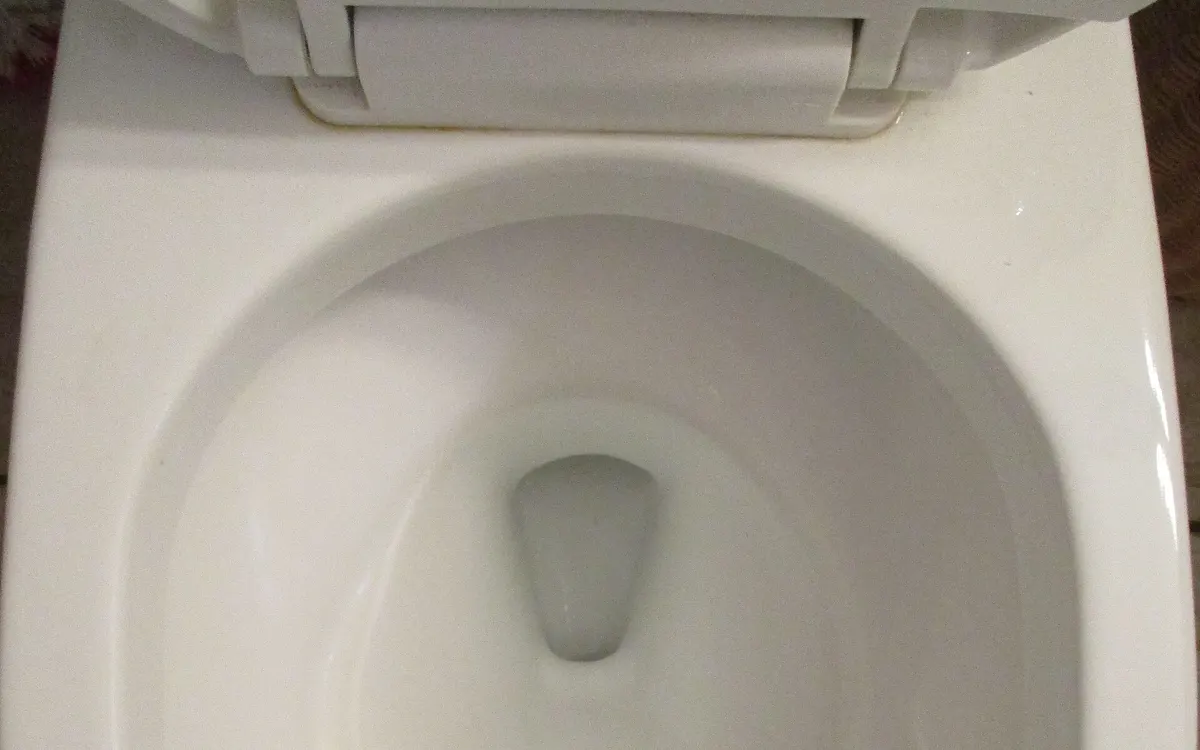
Hard water ring: the pumice method
- Lower the water. Turn off the valve behind the toilet and flush. The bowl empties below the ring. (Or plunge the water down with the brush.)
- Wet the pumice and the porcelain. Pumice on dry porcelain can scratch.
- Rub gently back and forth along the ring. It wears down the mineral crust; you will see gray paste.
- Turn the water back on and flush twice.
Pumice is for vitreous china (standard porcelain) only. Do not use it on colored, painted, or coated toilets, or on plastic seats.
Slime and mold rings: the brush method
- Apply one bowl cleaner under the rim and around the waterline.
- Leave it for the time on the label. Bowl cleaners and disinfectants need their contact time.
- Scrub under the rim, the waterline and the bottom, then flush.
- Dry the bathroom. Run the fan for 20 minutes after showers; mold and pink bacteria love a humid room.
The no-mix rule, toilet edition
The toilet is where most dangerous mixes happen:
- Acidic bowl cleaner + bleach releases chlorine gas.
- Bleach + urine in an unflushed bowl can release chloramine, because urine contains ammonia compounds.
- Two bowl cleaners of different brands can react.
Always flush, wait, flush again, and only then use a different product. More in cleaning products you should never mix. If someone feels dizzy or short of breath, get to fresh air and call Poison Help at 1-800-222-1222.
The tank: the part nobody looks at
Lift the tank lid. If you see black or brown film, that is mineral and bacterial buildup.
- Turn off the valve and flush to empty the tank.
- Scrub the walls with a brush and a mild cleaner. Do not put bleach tablets in the tank: many toilet manufacturers warn that they can damage rubber parts like the flapper.
- Turn the water back on.
Keep it from coming back
- Brush the bowl twice a week, even 30 seconds with no product.
- Clean the whole toilet weekly with the hotel order: outside in, top to bottom, bowl last.
- Use the rarely used toilets. Flush guest toilets every few days so a waterline ring cannot form.
- Hard water? A monthly pumice pass keeps rings thin.
Sources
- American Lung Association: Cleaning Supplies and Household Chemicals
- Poison Help line (1-800-222-1222)
Always follow the label on your product. Labels are the legal use instructions in the US.
Save this for cleaning day. Pin it so you can find it later.
Save to Pinterest Read next How to Get Rid of Fruit Flies: The Vinegar Trap and the Cleaning That Actually Ends It